
Holiday park EV charging: The new competitive advantage.
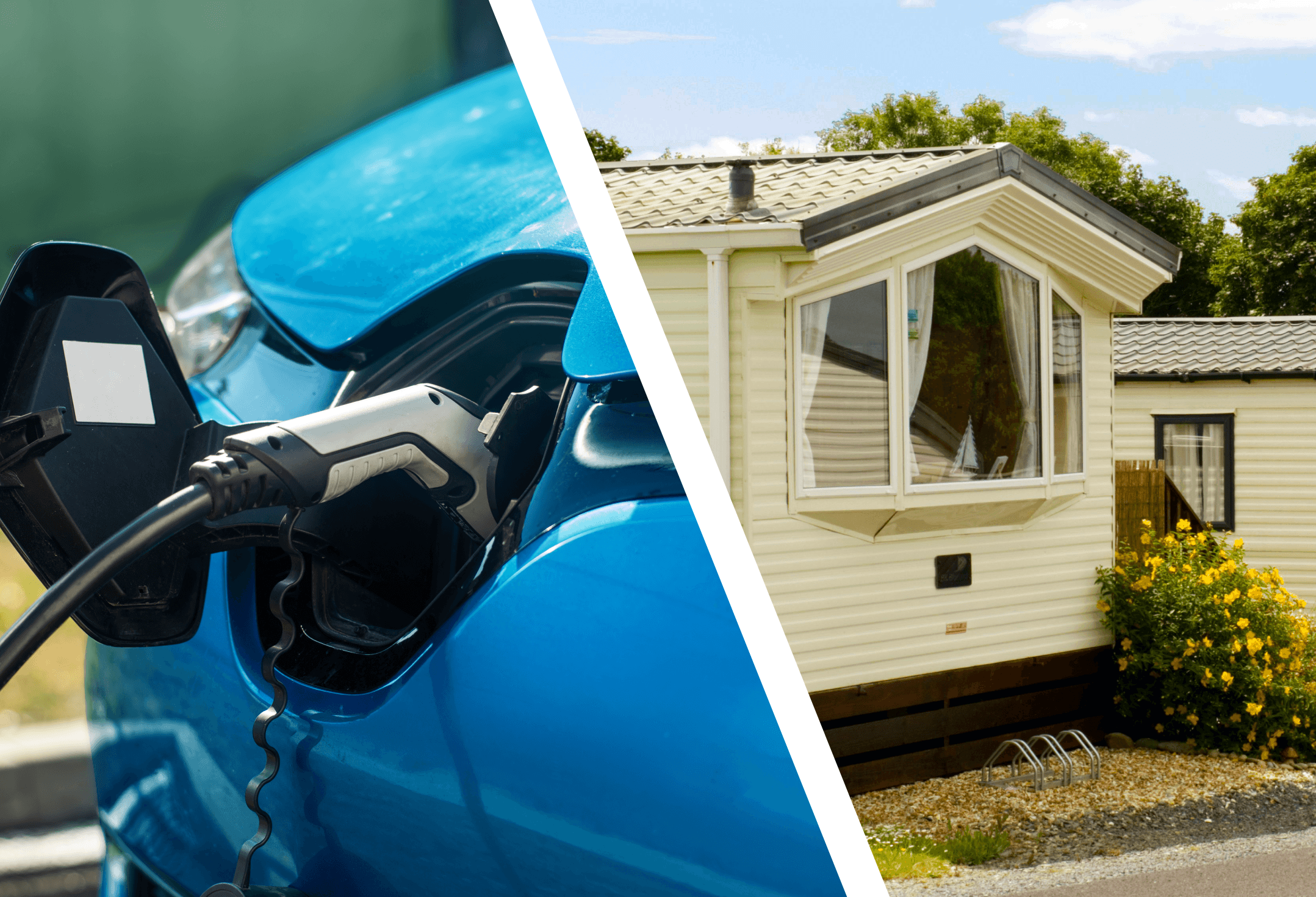
The electric vehicle revolution is rewriting the rules for short-stay leisure. The parks that move first stand to win. The rest face a very different kind of range anxiety.
There is a particular kind of stress that no holiday should involve. It starts somewhere on the A30, usually on the long stretch past Bodmin, when the range on the dashboard begins its slow, demoralising countdown. The cabin is booked. The kids are fractious. The dog is restless. And the nearest public charger is fourteen miles in the wrong direction.
This is the quiet, unreported reality of the British EV staycation in 2026. Nearly two million electric cars are now on UK roads. Their owners take holidays. They drive to Devon and the Cairngorms and the Pembrokeshire coast. And then, rather too often, they discover that nobody thought to install a charger at their destinations.
Six in ten UK holiday parks currently have no onsite charging provision at all. The parks that have worked this out are already attracting more customers. The ones that haven't are about to find out what it feels like to lose bookings to a competitor whose sole differentiator is a socket.
The use case nobody has noticed
The modern holiday park has invested heavily in hot tubs, fast Wi-Fi, and Nordic-inspired interiors. It has understood, largely, what the British family wants from a short break. What it has not understood is that a growing share of those families now arrive in a car that needs electricity and that car will sit, entirely stationary, on a pitch or in a car park for three, four, perhaps seven nights.
During which time it could be quietly recharged while its owners sleep.
This is the perfect scenario for EV charging. A guest arrives, plugs in, goes for dinner, falls asleep. Eight hours later they have a full charge waiting for them to start their next day of adventures. No detour, no stress, no drama.
The numbers
In 2025, pure-electric cars accounted for more than one in five new car sales in the UK, and the total number on the road grew by 35% in a single year. These are not early adopters. They are families, retirees, professionals, the demographic heartland of the British leisure break. And they are filtering their holiday searches by whether a site has charging, just as a previous generation filtered by whether it had a pool.
The use of accommodation charging among EV drivers grew by nearly 36% across 2025. Parks with charging are already visible to this audience on booking platforms and mapping apps. Parks without it are, to that same audience, invisible.
Install the right thing, or don't bother
Here is where many operators who do act will still get it wrong. They'll install a charger that requires guests to download an app. Or collect an RFID card from reception. Or create an account before they can start a session.
The EV driver on holiday shouldn't really have to think about charging. They're focused on getting to the pool, into the spa, having a beer. The best charging experience is the one they don't notice - plug in, walk away, come back to a full battery. Holiday parks already know how to deliver that kind of effortless transaction. The car park just hasn't caught up yet.
This matters more in a leisure setting than almost anywhere else. Your guest is not a commuter tolerating friction as part of a working day. They are on holiday. The moment they feel like they're doing IT support in a car park, you've lost something that no wood-fired hot tub can recover. A poor charging experience doesn't just fail to impress, it actively damages the impression your site has spent years building.
The standard to aim for is simple: if a guest can pay for a round of drinks at your bar without thinking about it, they should be able to charge their car with the same ease.
The case for doing nothing - and why it no longer holds
The reasons operators have hesitated are not entirely irrational. Installation costs are real. Rural grid connections can be awkward. And until recently, there was a reasonable argument that EV drivers were someone else's problem.
That argument has expired. The ban on new petrol and diesel car sales arrives in 2030. The guests booking lodges and touring pitches in 2028 are buying their first EV right now. Parks that invest today will have years of earned reputation, reviews, word of mouth, booking platform prominence, before the majority catch up.
Six in ten holiday parks still have no charging at all. For the operators ready to move, it is an opportunity.
