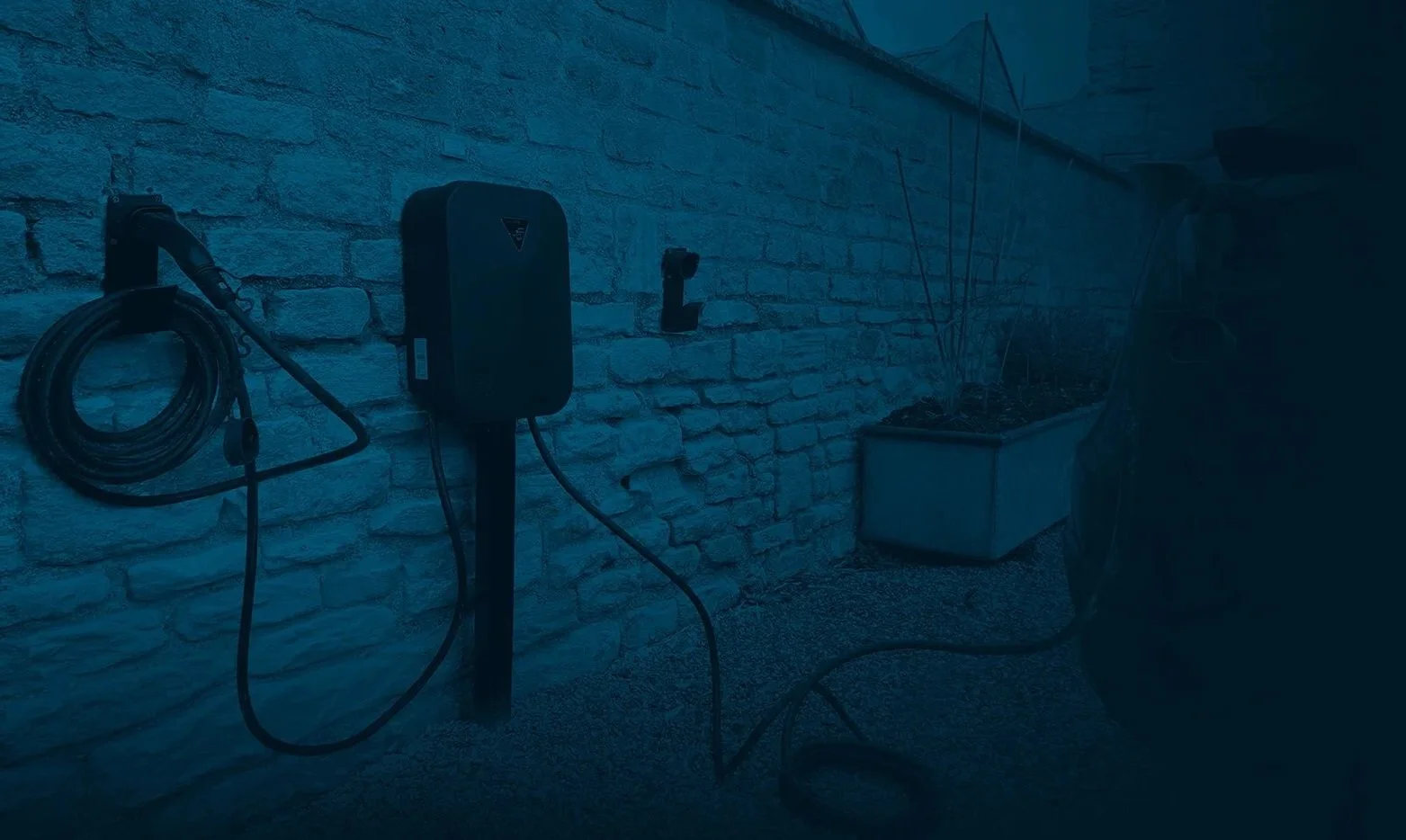
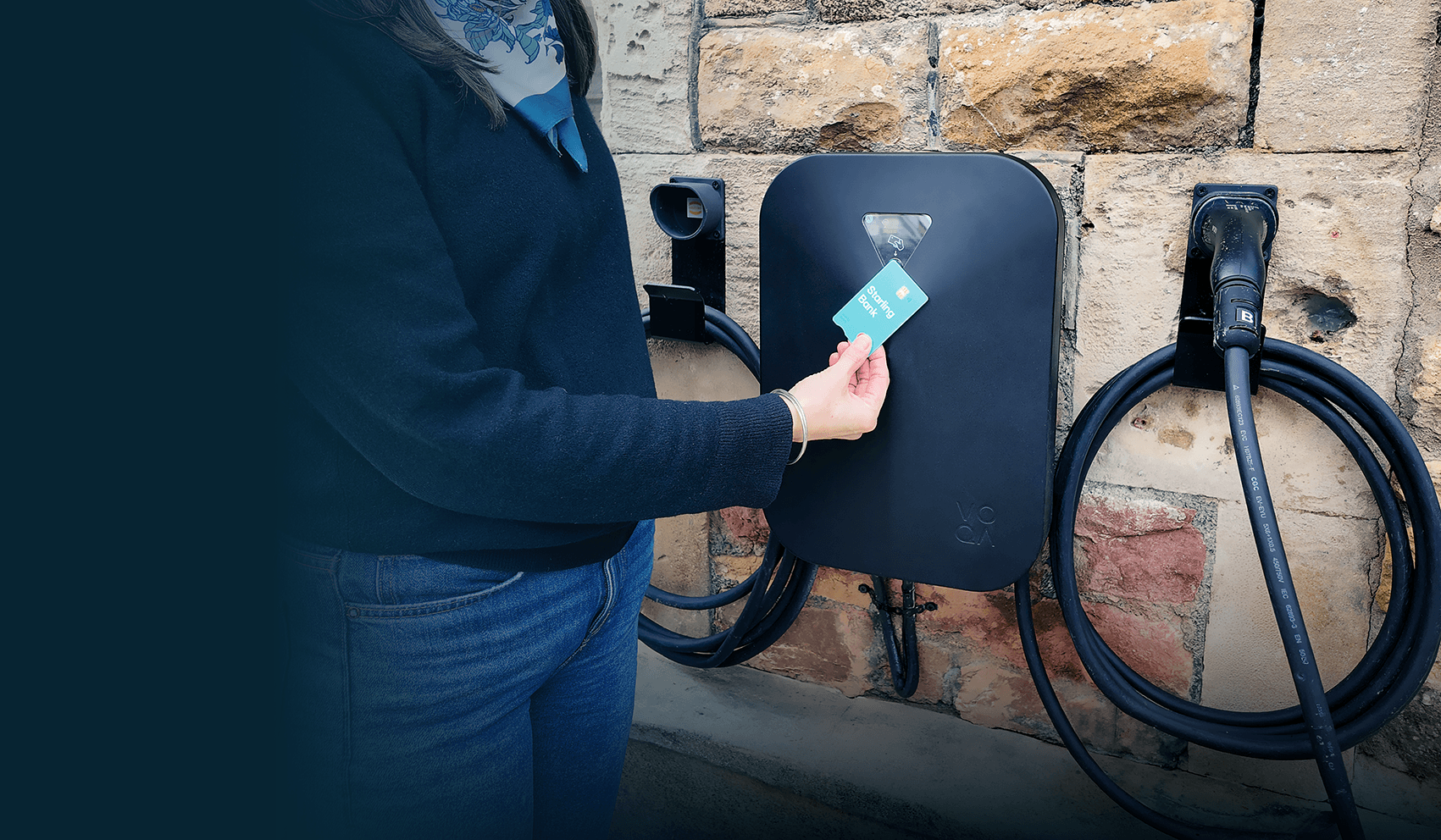
EV chargers with built-in contactless payments.
No app to download. No account to set up. No need for RFID cards.
The Voqa One is a commercial EV charger with contactless payments built in as standard, drivers simply pull up, plug in, tap and charge.
Designed for hotels, workplaces and destination businesses, it gives visitors a familiar way to pay and gives operators a simpler way to offer paid EV charging without making the driver jump through digital hoops.

Why contactless payments matter.
EV charging should not need a user manual…
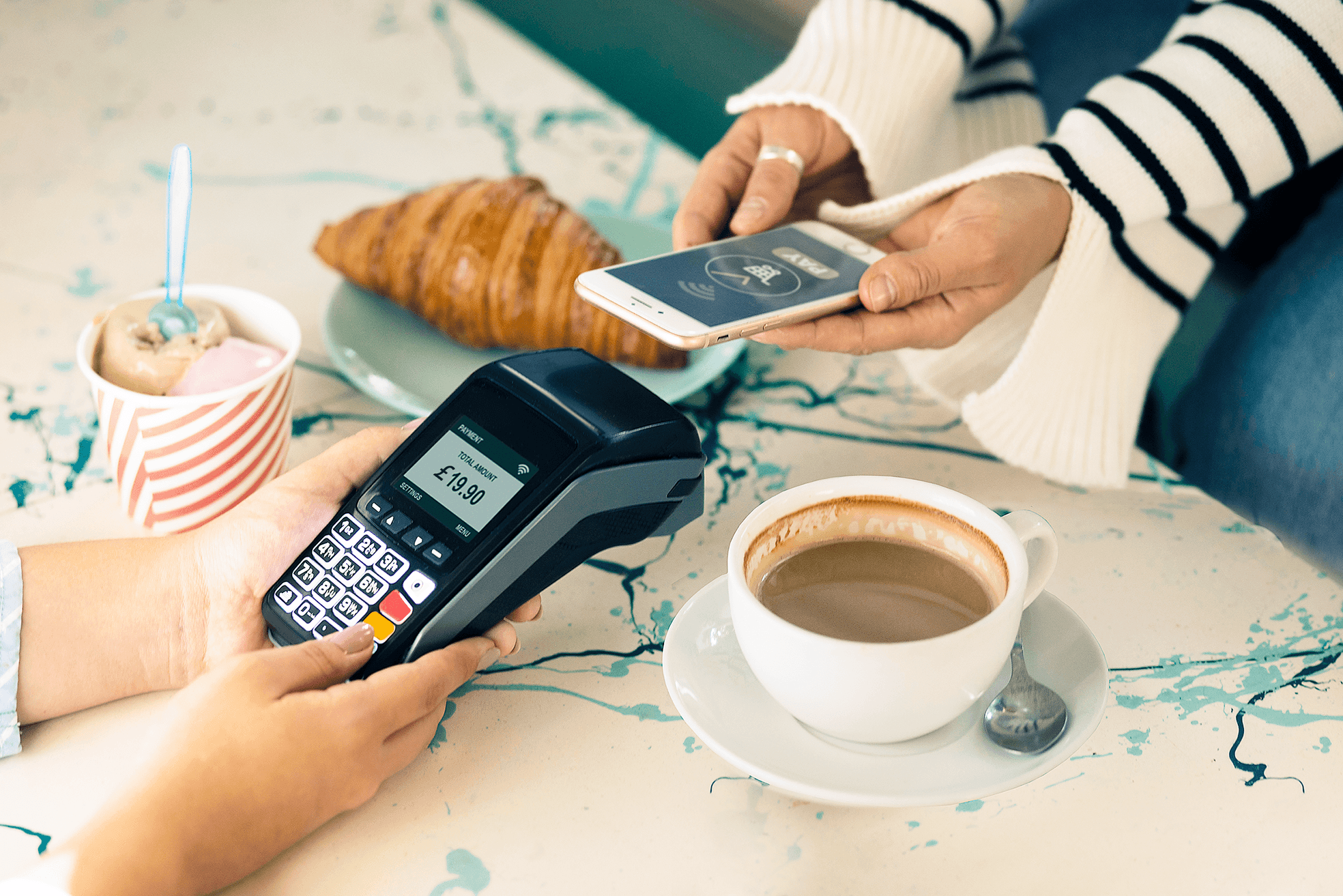
People are used to paying by card. Coffee, parking, fuel, lunch, train tickets. Tap. Done. EV charging should feel just as familiar.
But too often, the driver experience involves scanning a QR code, downloading an app, creating an account, topping up a wallet, or trying to remember which network uses which payment method. And that’s only if there’s a phone signal.
That is not a premium experience. It’s a faff.
For destination businesses, this matters. If someone is staying at your hotel, visiting your workplace, using your gym or spending the afternoon at your venue, EV charging should feel like part of the service - not an admin task that gets in the way.
Contactless payments reduce that friction. They make charging easier for guests, visitors, staff and the EV driver who simply does not want another app on their phone.
Read our Contactless vs App-Based EV Charging blog post for more detail.
Why is contactless payment useful for destination EV charging?
Contactless payment is useful for destination EV charging because visitors may only use the charger occasionally. A hotel guest, customer or visitor may not want to download a new app just to charge for a few hours. Contactless payment makes the process quicker, easier and more familiar.
Can you pay for EV charging with a contactless card?
Yes. For many drivers, this is the easiest way to start a charging session because they do not need to download an app, create an account or carry a separate RFID card. UK public charging rules also require contactless payment access on many new public charge points above 8kW.
Do EV drivers need an app to use a contactless EV charger?
No. A contactless EV charger allows a driver to pay directly with a debit card, credit card, Apple Pay or Google Pay, depending on the payment system. This means the driver does not need to download a network app or set up an account before charging.

Built in, not bolted on.
Contactless payments, built into the charger.
Some EV chargers treat payments as an afterthought. A box here. A QR code there. A third-party workaround doing its best. Functional, perhaps. Elegant, no.
The Voqa One is different. Contactless payments are built in as standard, not added later as an aftermarket extra. That matters because payment is not a minor detail. It is the moment the driver actually uses the charger. If that moment is clunky, the whole experience feels clunky. For a business, payments need to work without any issues what so ever.
With Voqa, the payment experience is part of the product from the start. The charger, the screen, the payment flow and the user experience are designed to work together.
A commercial EV charger should not just charge vehicles. It should help the business provide a better service.
What is a built-in contactless EV charger?
A built-in contactless EV charger is an EV charge point where the payment terminal is integrated into the charger itself. The driver can pay directly at the unit using a contactless card or mobile wallet, rather than using a separate payment device, app-only system or external payment add-on.
Is a built-in payment terminal better than an EV charging app?
For many public and semi-public locations, yes. Apps can be useful for regular users, fleets or network memberships, but contactless payment is usually simpler for occasional drivers. It gives people a familiar pay-as-you-go option without forcing them to register first.


Made for commercial locations.
A better fit for hotels, workplaces and destination businesses.
Contactless EV charging is especially useful where drivers are not charging every day. That includes:
EV charging for Hotels, where guests may be visiting once and need a simple overnight charge and staff have more important things to tend to.
Workplace EV charging, for staff, visitors and fleet drivers.
Leisure destinations, where customers are already spending time on site and want charging to be easy, not another task.
Visitor attractions, business parks, shared parking locations and mixed-use sites.
This is where EV charging with contactless payments makes commercial sense. They reduce confusion, make access easier and help businesses offer paid charging without creating unnecessary barriers.
Voqa One also includes dual tethered cables, allowing two vehicles to charge from one unit. For businesses planning multiple charging spaces, that can reduce the amount of hardware and installation work needed compared with fitting two separate chargers.
What type of businesses need EV chargers with contactless payments?
EV chargers with contactless payments are useful for hotels, workplaces, leisure venues, visitor attractions, car parks, business parks and shared parking locations. They’re especially useful where drivers may not be regular users and need a quick, familiar way to pay.
What is the easiest way for visitors to pay for EV charging?
For occasional visitors, contactless payment is usually the easiest option. The driver can use a contactless bank card or mobile wallet without downloading an app, creating an account or arranging an RFID card in advance.


Compliance, confidence and next steps.
Built for the direction EV charging is heading.
The UK charging market is moving toward simpler, more transparent public charging.
The Public Charge Point Regulations 2023 require contactless payment on certain public charge points, including new public charge points of 8kW and above, within the relevant implementation period. The wider direction is clear: drivers should be able to access and pay for charging without needing a pre-existing contract.
For businesses, this is not just about ticking a compliance box. It’s about offering EV charging that feels credible, modern and easy to use.
Because the charger is not really finished when it is installed. It is finished when a driver can use it without asking for help.
The Voqa One is a commercial EV charger with built-in contactless payments, dual tethered cables and a modular design, created for businesses that want EV charging to feel simple from the driver’s side and sensible from the operator’s side.
Head to our EV charging payment FAQs page for more information.
Can a business charge customers for EV charging?
Yes. A business can usually charge customers, visitors or staff for EV charging if the charger and payment system are set up to support paid sessions. The best payment method depends on the site, user type and whether the charge point is public, private or restricted access.
Do UK public EV chargers need to offer contactless payment?
It depends, UK Public Charge Point Regulations require contactless payment access for certain public charge points, including new public charge points of 8kW and above. Businesses should check whether their site is classed as public or restricted public access before choosing a solution.